Hiller Aviation Museum
I recently wound up a three-week visit with my daughter, DeAnne, in Concord, CA. While planning the 500+ mile trip back to my home in Ridgecrest, CA, I made the decision to take the long way down the state and break the trip into three days. With each day taking less than three hours driving time that gave me time to play Tommy Tourist and exercise my camera(s). First day: Intercept California Hwy 1 near Santa Clara to overnight in Monterey.
I went surfing the Internet for places to go and things to see on the way. I planned my first stop would be the Hiller Aviation Museum in San Carlos. Hiller may not rank as high in the helicopter industry as Sikorsky, Bell, or Hughes but he built flying machines. That counts for me and rated a visit to his museum.

The building at the San Carlos Airport is easy to find and covers an area about the size of two side-by-side football fields. It’s not the smallest aviation museum I’ve visited, and it is packed with displays. It is, in my opinion, aimed mostly at the younger generation. Young people outnumbered adults by a wide margin and I think that gives the museum extra plus marks. The museum staff includes plenty of staff the guide the little people through various hands-on aviation learning projects.
If an aviation museum could have a cliché, the Wright Flyer would define it. This replica is the first thing a visitor encounters after paying a modest fee and being wrist-banded at the front lobby. From there I wandered around a while before remembering I had a camera, so the following photos are in not in floor display sequence.

I do have one gripe about the museum: It is not particularly camera friendly. As you will see, many glaring spotlights play havoc with composition while colored floodlights interfered with hues. Here’s an example of both in one shot.
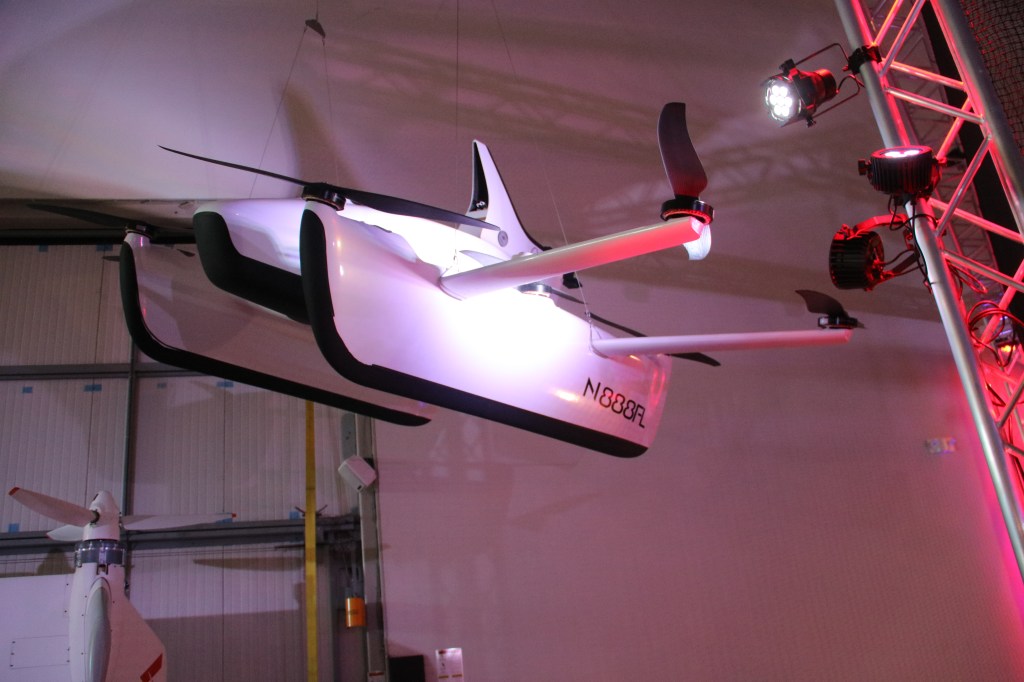
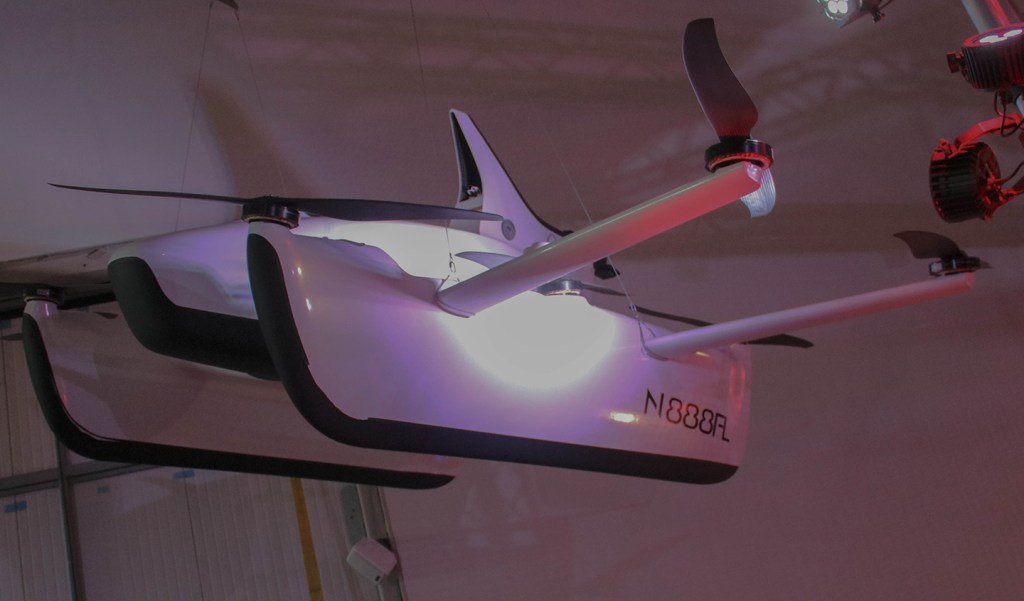
I spent well over an hour trying to mitigate the overpowering glare from the spotlight near the upper right corner. Sigh. I ended up with:
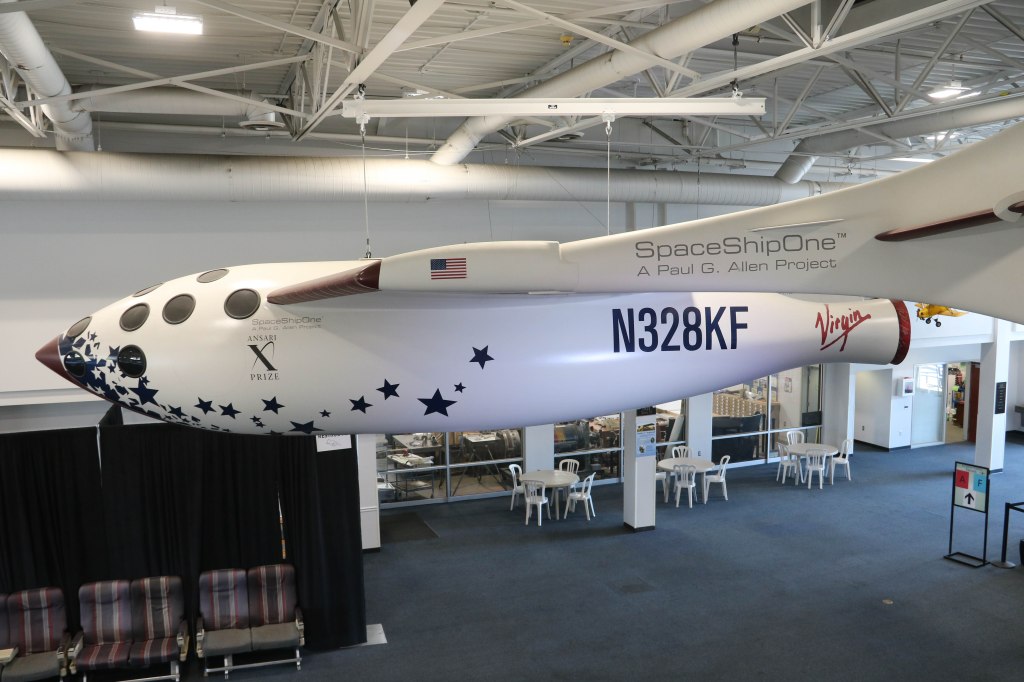
The most expensive sight-seeing aircraft, ever. This is a replica of Richard Branson’s SpaceShip One by the Virgin Galactica enterprises. As of this writing, the first commercial flight with paying passengers is scheduled for some time in 2023.
I’m going to have to wing (pun) it on the pictures from here on. I can’t find the scribbles I made for captions but here and there I may make personal comments/observations and shamelessly borrow from Wiki. I’m sure this is a Stearman PT-17. Although the airplane I took a ride in many years ago didn’t have the engine cowling this ship appears to have. That was back in Galveston, Texas, when I was in the Civil Air Patrol.

Flight simulators were the main attraction on the mezzanine deck. They were all reserved for the kids so I didn’t get a turn.

The two museum persons overseeing the area seemed to be there only to keep the kids from damaging the equipment. From the realism perspective, all the systems had helicopters on the screen but the controls were all stick-and-rudder. No cyclics and collectives. Pity. At least the kids didn’t care.
If you ever watched a single issue of MASH, you saw a Bell H-13 Sioux like this one equipped as a Med Evac. Most of the Sioux were used as observation aircraft. They were one of the first in the series of American Indian tribal names.
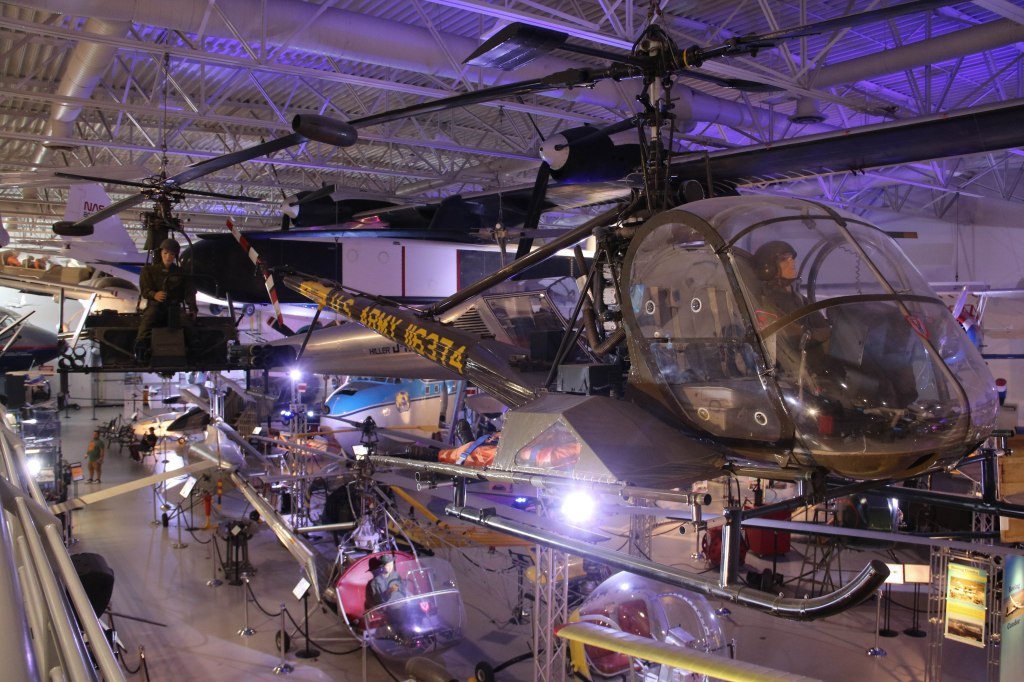

[Trivia question: Why are helos mostly flown by a pilot in the right seat?]

Gosh Darned Spotlights wiped out the info for the YH-32 Gunship. The tubes at the bottom (yellow striped) are launchers for 4-inch, high explosive, air-to-ground rockets. Four mounted on each side. Here’s a better view.
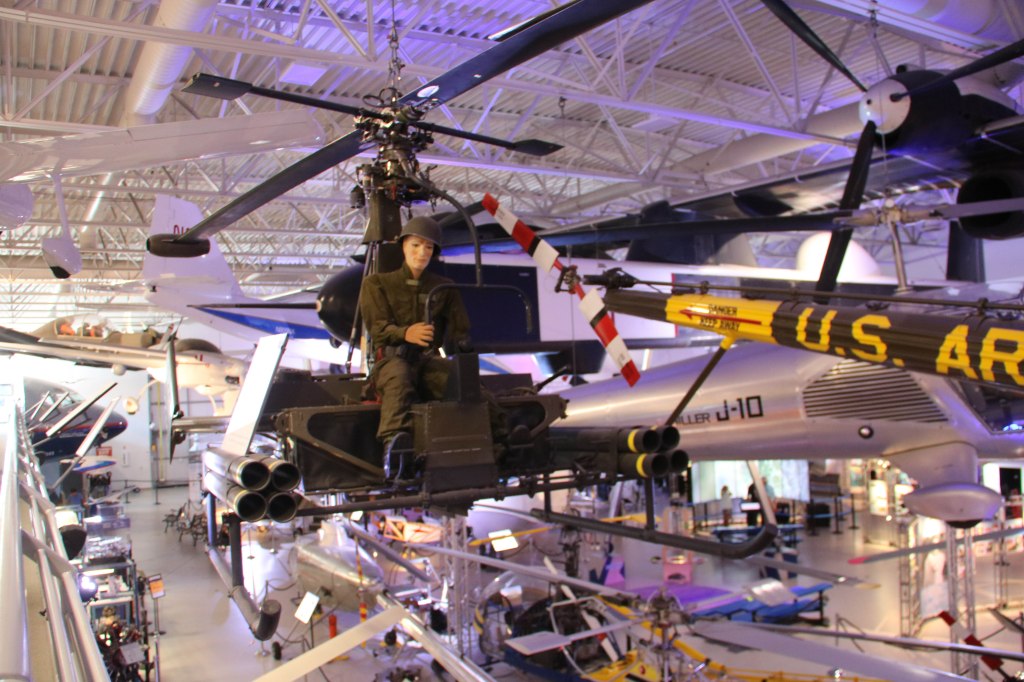
Guess where the twin engines are. That bulge directly behind the pilot is the fuel tank for the ram-jet engines, one on the tip of each main rotor.

* * * * *
Boeing 737 cockpit

* * * *
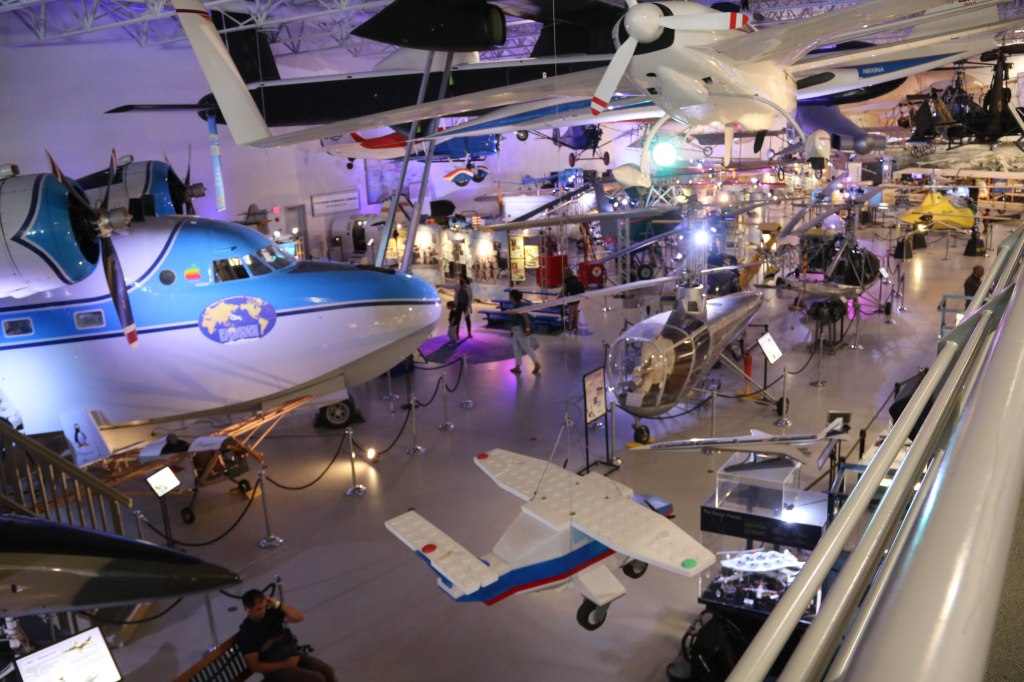
The view from the mezzanine deck
* * * *
Finally, something by Hiller
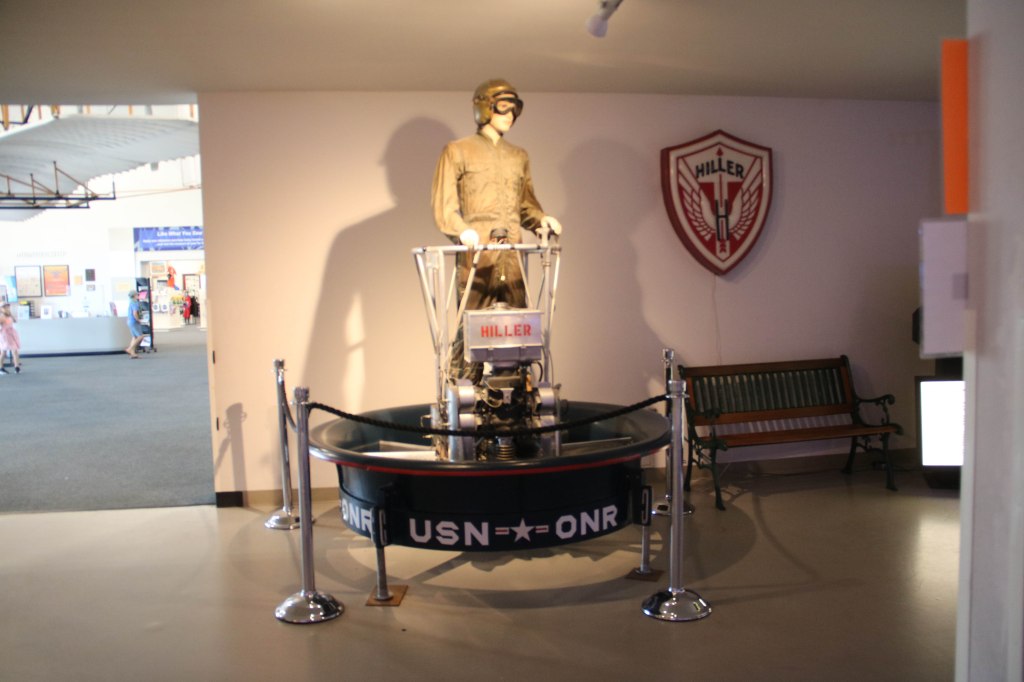
The Marines were testing this at Camp Pendleton, CA, just as I was gearing up for my first overseas tour. I only heard about it, didn’t get to see it. Later the story, no doubt authored by a Marine, was the Corps declined it because it didn’t have guns.
* * * * *
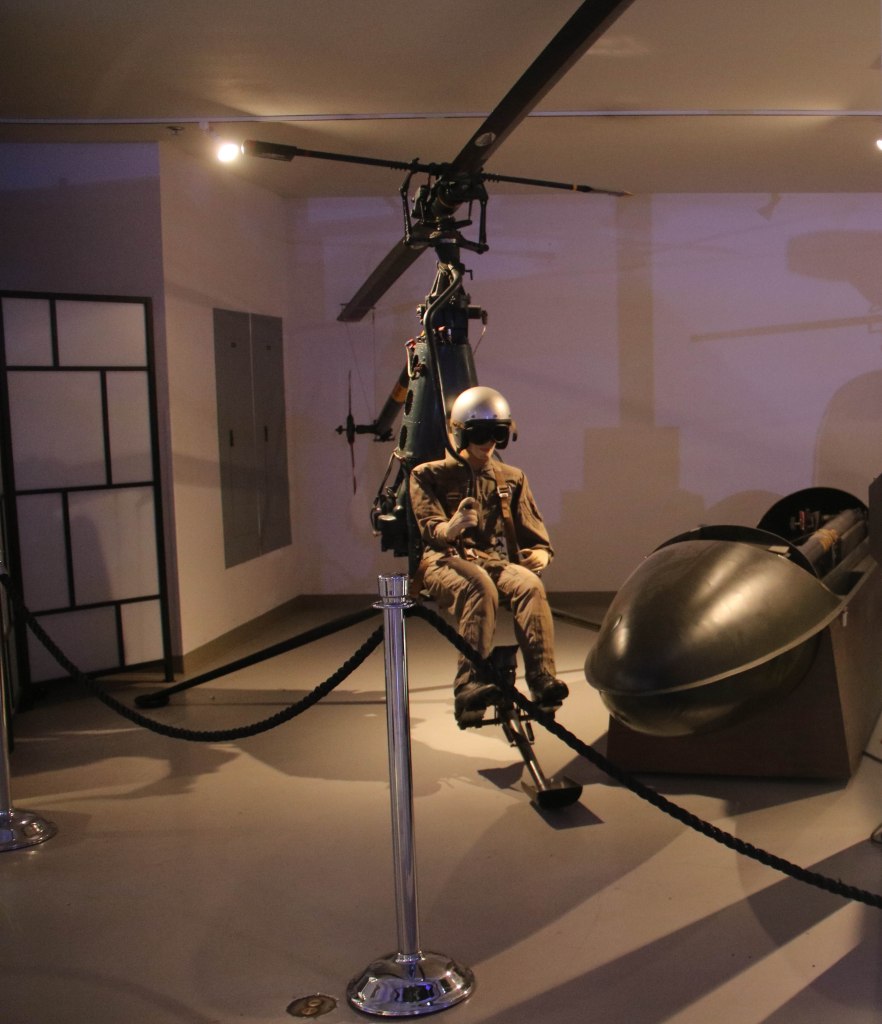
The “Rotorcycle” the pilot is sitting on was delivered to him by parachute after he crashed landed his fighter jet. It came folded and packaged in the container on the floor to the pilot’s left with assembly instructions [Insert rotor blade A into slot B, then………]. The military customer was the United States Marine Corp. Hooorah! Any Marine Aviator could fly this thing.
* * * *
The Del Mar Engineering company developed this DH-20 MedEvac helicopter. The trough looking area behind the pilot’s seat was for stapping in an injured warrior and carrying him to an Aid Station.

*****
Crazy way to use 12 engines

* * * * *

Someone here in Ridgecrest had one of these. California DMV classified it as a motorcycle. I remember seeing it driving on the Naval Air Warfare Center and here and there about town. I’m thinking it spent the summer in the owner’s garage.

* * * * *

* * * * *

* * * * *
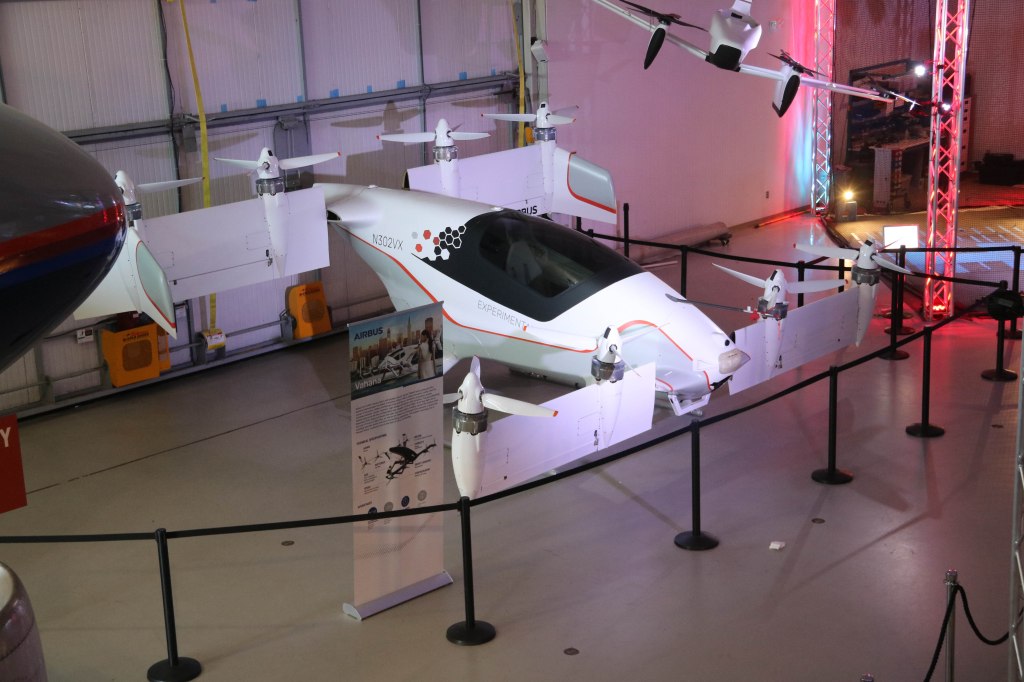
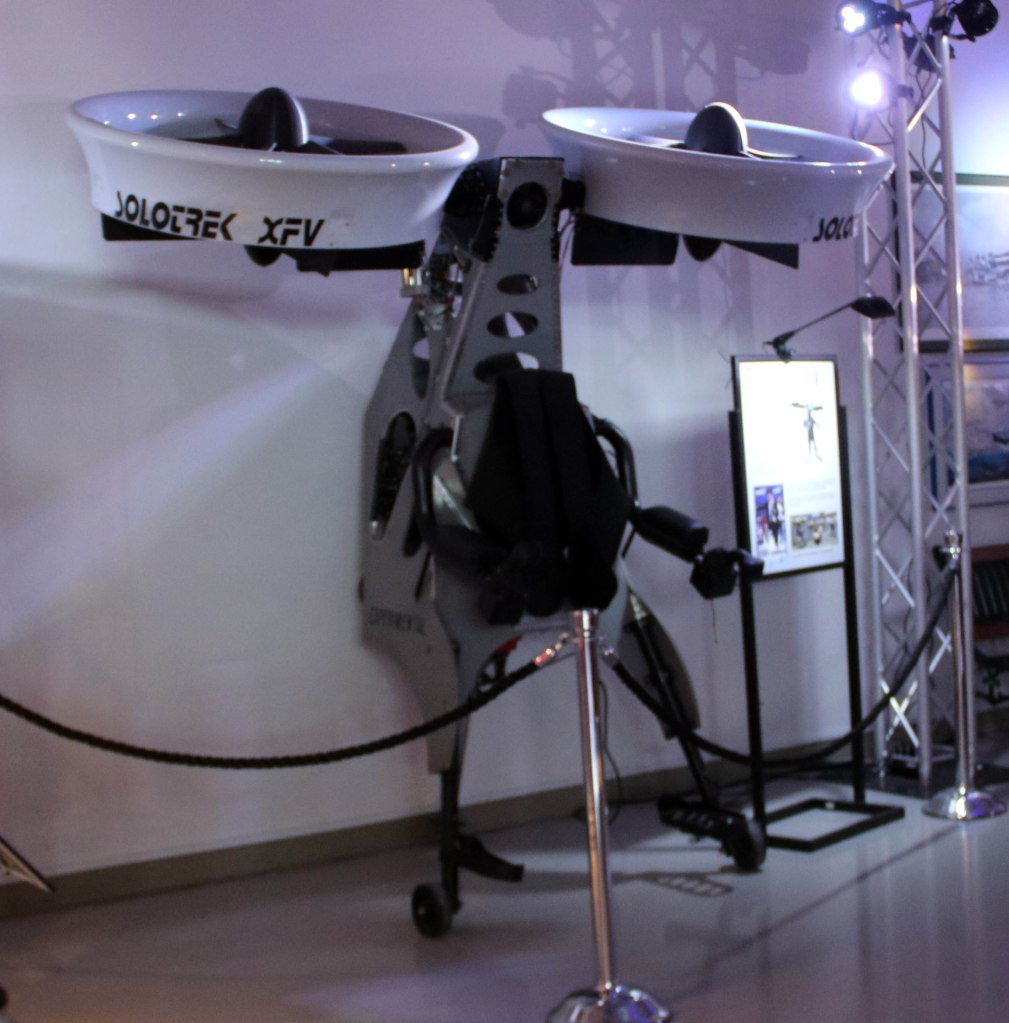
I can’t remember any details for this. I was thinking it might be more fun than an ultralight.
* * * * *


* * * * *


* * * * *
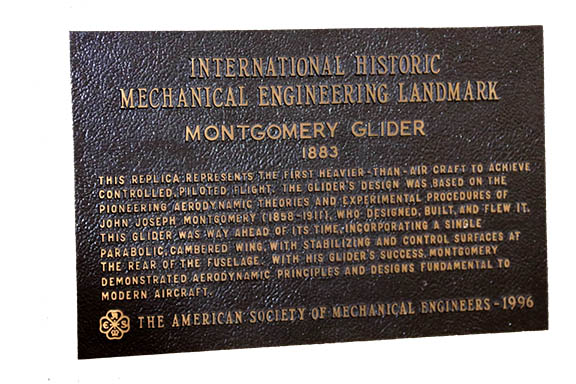
Some consider John Montgomery to have beaten Orville and Wilbur.

*****
It’s not the largest of the sixty-five aviation related museums in California, but if you are ever near San Carlos, California I recommend a visit to the Hiller Aviation Museum. I’ll do it again when I have more time. For a comprehensive list go to: https://aerocorner.com/blog/aviation-museums-in-california/. Now the highway to Monterey was calling me to get going.
<30>
 A Freelance Writer's Blog